Updated for 2026 — This article has been reviewed and updated with the latest recommendations.
Automatic espresso machines take the guesswork out of pulling a great shot. They grind the beans, tamp the grounds, extract at the right pressure, and some even steam milk for you. The technology has gotten better and more affordable in 2026, with several machines under $1,000 producing espresso that rivals what you get at specialty cafes. Here are six of the best.
1. Breville Barista Express Impress
The Barista Express Impress improved on the already popular Barista Express by adding an intelligent dosing system that guides you to the correct grind size.
A simple indicator tells you if the dose needs to be finer or coarser, which eliminates the biggest frustration new espresso users face. The integrated conical burr grinder has 25 settings and grinds directly into the 54mm portafilter.
The 15-bar Italian pump delivers consistent extraction and the PID temperature control keeps the water within 2 degrees of the target throughout the shot. The steam wand produces microfoam suitable for latte art with some practice.
Build quality is excellent with a brushed stainless steel body that feels substantial on the counter. At $749, it is the best semi-automatic with training wheels for beginners who want to learn espresso fundamentals.
Price: $749
2. De'Longhi Magnifica Evo
The Magnifica Evo is a fully automatic bean-to-cup machine that does everything with the press of a button.
It grinds, tamps, brews, and can make milk drinks using the LatteCrema system that froths milk automatically to your preferred texture. No barista skills required.
The machine offers 7 one-touch drink options including espresso, long coffee, cappuccino, and latte macchiato. The 13-step conical burr grinder adjusts to your preferred grind size and the machine remembers your settings between uses.
Water tank capacity is 60 oz, which means fewer refills. At $699, it undercuts most fully automatic competitors while delivering reliable performance and solid build quality.
Price: $699
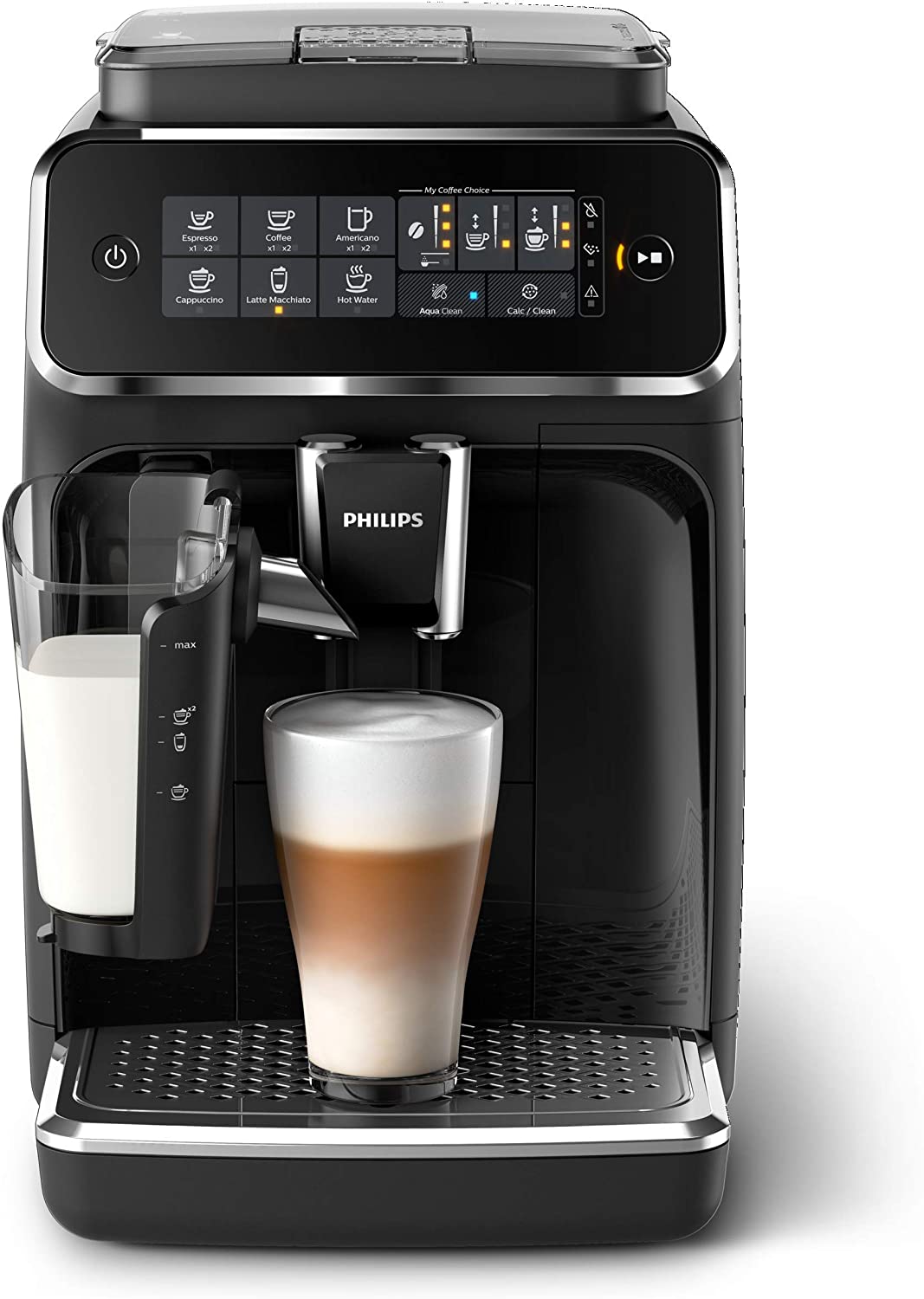
3. Philips 3200 Series LatteGo
Philips designed the 3200 LatteGo around one principle: easy cleanup. The LatteGo milk system has only two parts and no tubes to clean, which means rinsing it takes about 15 seconds compared to the several minutes required by traditional steam wand or tube-based systems. For daily use, this convenience makes a real difference.
The machine brews 5 drinks from fresh beans with an intuitive touchscreen interface.
The ceramic flat burr grinder runs quieter than steel burrs and stays sharp longer. Espresso quality is good though not quite at the level of the Breville for pure espresso shots. Where the Philips excels is in milk drinks, where the LatteGo produces consistent, creamy foam every time. At $799, the convenience premium is worth it if milk drinks are your daily routine.
Price: $799
4.
Gaggia Classic Evo Pro
The Gaggia Classic has been an entry point into serious espresso for over 30 years. The 2026 Evo Pro version updates the internals with a commercial-style solenoid valve, a 58mm portafilter that accepts aftermarket baskets, and an improved steam wand borrowed from their commercial line.
This is a semi-automatic machine that requires a separate grinder. It does not have built-in grinding, automatic milk frothing, or programmable recipes.
What it offers is a platform for learning espresso at a professional level with components that respond to your technique. The commercial-size portafilter means you can use accessories and baskets from the prosumer market. At $499, it is the most affordable path to genuine espresso craft.
Price: $499
5. Jura E8 (2026 Model)
Jura occupies the premium end of the fully automatic market, and the 2026 E8 justifies its price with espresso quality that genuinely competes with manual machines.
The Pulse Extraction Process optimizes water flow through the coffee puck in intervals, extracting more flavor without over-extraction. The result is a cleaner, more nuanced espresso than most automatics produce.
The E8 offers 17 programmable specialties and the full-color touchscreen makes customization straightforward. The AromaG3 grinder is remarkably quiet and produces a consistent grind. Maintenance is largely automated with prompted cleaning cycles and a self-cleaning milk system. At $2,199, this is an investment. But for households that drink 4 or more espresso-based drinks per day, the per-cup cost drops below cafe prices within the first year.
Price: $2,199
6.
Breville Bambino Plus
The Bambino Plus is the smallest and most affordable espresso machine from Breville that still produces genuine espresso with proper pressure and temperature control. The thermojet heating system reaches extraction temperature in 3 seconds, meaning you can pull a shot almost immediately after turning the machine on.
It uses a 54mm portafilter with pressurized and non-pressurized basket options.
The automatic steam wand heats milk to the correct temperature with hands-free operation. It does not have a built-in grinder, so you need to pair it with a separate one. At $399, it is the best option for small kitchens or anyone who wants quality espresso without a large machine footprint.
Price: $399
Choosing the Right Espresso Machine
If you want full automation with no learning curve, the De'Longhi Magnifica Evo or Philips 3200 will make good coffee every morning without requiring any skill.
If you want to learn the craft and improve your technique over time, the Gaggia Classic Evo Pro or Breville Barista Express Impress give you that hands-on experience.
Budget matters but so does your daily routine. A $699 fully automatic machine that gets used twice a day pays for itself versus cafe purchases within 6 months. A $2,199 Jura takes longer to break even but produces a noticeably better cup if you can taste the difference.